
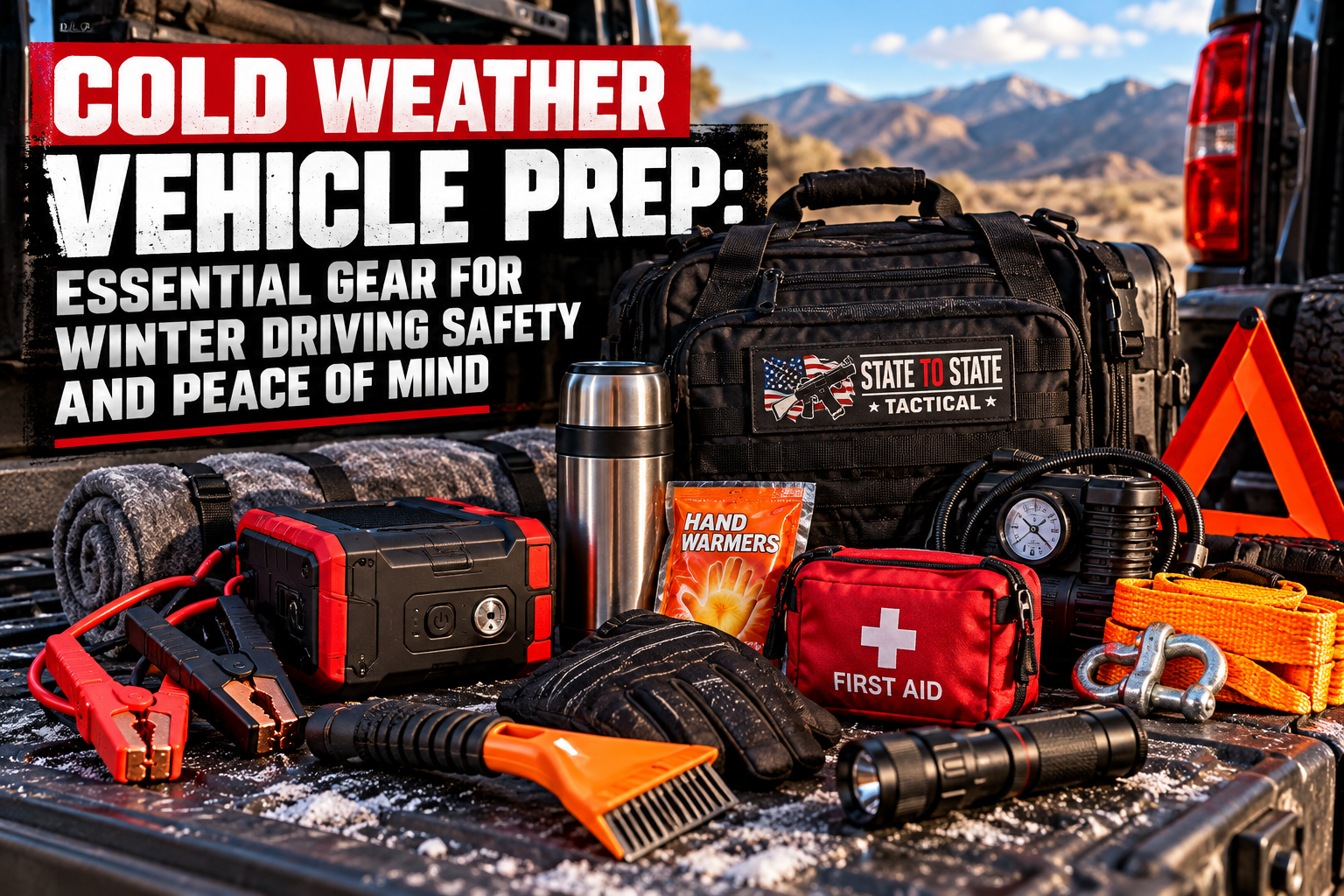
Cold weather can turn an ordinary roadside delay into a much more serious problem. A dead battery, flat tire, unexpected traffic closure, or vehicle breakdown is harder to manage when temperatures drop, daylight is limited, and snow or ice affects road conditions. A winter vehicle kit helps keep useful equipment organized and accessible before you need it.
The goal is not to fill your vehicle with every piece of emergency equipment available. A practical approach is to cover the most likely needs: warmth, visibility, basic first aid, vehicle power, tire problems, communication, hydration, and the ability to wait safely for assistance.
What Should Be in a Cold-Weather Vehicle Kit?
A winter kit should build on the basic emergency equipment you already carry. Start with dependable essentials, then add cold-weather items based on your climate, driving distance, vehicle, and typical travel conditions.
1. Warm Layers and an Emergency Blanket
Keeping warm becomes a priority if a vehicle cannot provide heat. Pack a compact blanket or emergency blanket along with gloves, a warm hat, and an extra insulating layer. If several people regularly travel in the vehicle, plan enough protection for everyone rather than relying on a single blanket.
Store fabric items in a dry bag or sealed container so moisture from snow, rain, or spilled cargo does not make them unusable.
2. Flashlight and Backup Lighting
Winter brings shorter days, so a breakdown may quickly become a low-light situation. Keep a dependable flashlight where it can be reached without unloading the entire vehicle. A headlamp can also be useful because it keeps both hands available while checking a tire, looking under the hood, or organizing supplies.
Check batteries periodically. Rechargeable lights should be topped off on a routine schedule, while lights using replaceable batteries should have a fresh backup set stored appropriately.
3. Portable Jump Starter or Jumper Cables
Cold temperatures can reduce battery performance, making starting problems more common. Traditional jumper cables remain useful when another vehicle is available. A properly maintained portable jump starter provides another option when assistance is not immediately nearby.
Choose equipment compatible with your vehicle and follow the manufacturer’s operating instructions. Recharge portable battery equipment on the schedule recommended by its manufacturer instead of leaving it forgotten in the vehicle for months.
4. Tire Inflator and Tire Equipment
Cold temperatures can affect tire pressure, and winter road hazards can lead to punctures or other tire problems. A compact tire inflator can help restore pressure when a tire is low. Your vehicle should also have the correct jack, lug wrench, and spare-tire equipment if it was designed to use them.
Before winter travel, confirm that the spare tire is properly inflated and that you know where the factory tools are stored. Equipment is much more useful when you already understand how it works.
5. Ice Scraper and Snow Brush
An ice scraper and snow brush are simple items that should be easy to reach. Clearing windows, mirrors, lights, and exterior cameras improves visibility and helps vehicle safety systems work as intended. Avoid relying on improvised objects that may damage glass or painted surfaces.
6. Roadside Visibility Gear
Being visible is especially important during snow, rain, darkness, or reduced visibility. Reflective warning triangles, a reflective vest, and appropriate emergency lighting can help make a stopped vehicle easier for other drivers to notice.
Place warning equipment only when it is safe to do so. Traffic conditions, road shoulders, weather, and local rules should guide whether leaving the vehicle is appropriate.
7. First Aid Supplies
A compact first aid kit can address minor cuts, scrapes, and common small injuries while you wait for additional help. Keep supplies organized and inspect the kit periodically for damaged packaging or expired items.
First aid equipment does not replace professional medical care. For serious injuries or medical emergencies, contact emergency services when available.
8. Water and Shelf-Stable Snacks
Unexpected delays can last longer than expected. Carry drinking water and a modest supply of shelf-stable food that works for the people who normally ride in the vehicle. Rotate food and water periodically rather than treating them as permanent cargo.
Freezing temperatures can affect containers, so consider how water is stored in your climate and inspect it regularly for damage or leakage.
9. Phone Charging Equipment
A charged phone can be important for navigation, weather information, roadside assistance, and emergency communication. Keep a vehicle charging cable that matches your devices. A charged power bank can provide backup power if the vehicle’s electrical system is unavailable.
Extreme temperatures can affect rechargeable batteries, so follow the device manufacturer’s storage recommendations and inspect portable power equipment regularly.
10. Tow Strap and Recovery Equipment
Recovery equipment can be useful, but it requires more caution than ordinary emergency supplies. A tow or recovery strap must be appropriate for the intended use, attachment points, and vehicle. Improper recovery can damage vehicles or cause serious injury.
If you are not familiar with safe vehicle recovery procedures or approved attachment points, professional roadside assistance is the better option.
Where Should Winter Emergency Gear Be Stored?
Keep the kit in a secure location that remains accessible after loading groceries, luggage, tools, or other cargo. A tactical bag, trunk organizer, or dedicated gear container can keep equipment together and prevent smaller items from rolling around the vehicle.
Frequently needed items such as a flashlight, gloves, scraper, and reflective vest should be especially easy to reach. Heavy objects should be restrained so they cannot become hazards during sudden stops or a collision.
Inspect the Kit Before Winter Travel
A vehicle emergency kit is not a one-time project. Before colder weather arrives, inspect the contents and confirm that rechargeable equipment works, batteries are fresh, food and first aid supplies are within date, clothing is dry, and vehicle-specific tools are present.
This is also a good time to check normal vehicle maintenance items such as tires, windshield washer fluid, wiper condition, battery health, and fuel level. Emergency gear works best as one part of broader vehicle preparedness.
Adjust the Kit to Your Driving Conditions
A driver making short trips in a mild winter climate may need a different setup from someone regularly traveling through snow, mountains, or remote areas. Consider distance from services, expected weather, passenger needs, road conditions, and how quickly roadside assistance could realistically reach you.
The strongest kit is one you understand, maintain, and can access quickly. Start with the basics, organize them well, and add equipment that matches the conditions you actually encounter.
Cold-Weather Vehicle Kit FAQ
Should I leave my winter emergency kit in the vehicle all year?
Many core items can remain in the vehicle, but seasonal supplies should be reviewed as conditions change. Remove or replace anything that should not be exposed to prolonged heat or cold, and follow manufacturer storage guidance for batteries and electronic equipment.
How often should I inspect the kit?
A seasonal inspection is a practical minimum, with additional checks before long trips. Recharge power equipment, inspect first aid supplies, rotate food and water, and confirm that lights and vehicle tools work.
Do I need both jumper cables and a portable jump starter?
They serve similar purposes in different situations. Jumper cables require another suitable vehicle, while a charged portable jump starter can provide an independent option. Drivers may choose one or carry both depending on their needs.
What items should stay within easy reach?
A flashlight, reflective vest, gloves, ice scraper, phone charging cable, and basic first aid supplies are good candidates. The exact arrangement depends on your vehicle, but avoid burying essential equipment beneath luggage or cargo.
Leave a Reply