
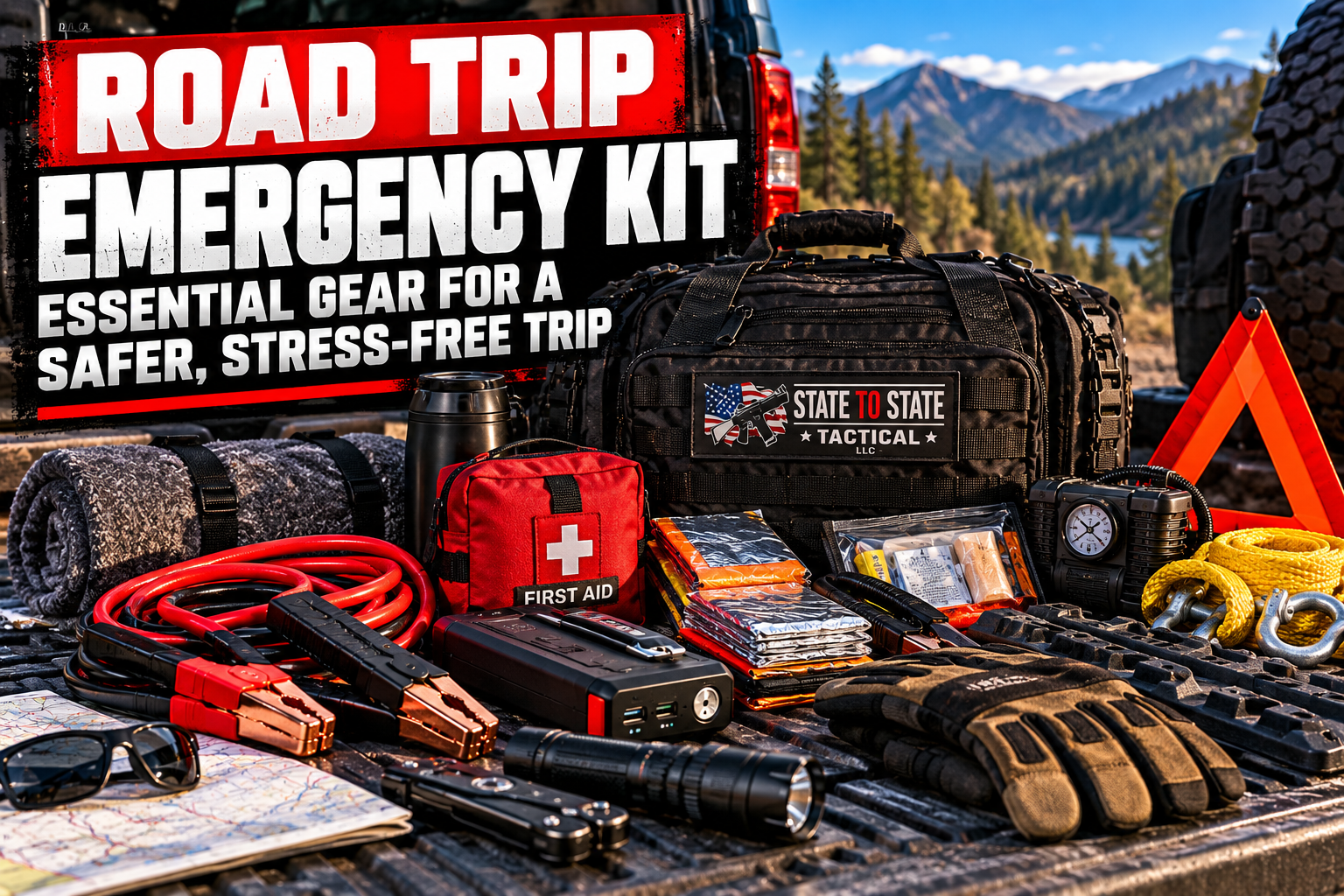
A long road trip can take you through areas where fuel, repair shops, cell service, and roadside assistance are farther away than expected. A well-organized road trip emergency kit gives you practical options when a flat tire, weak battery, unexpected delay, severe weather, or minor roadside problem interrupts the drive.
The best travel kit is not simply the largest collection of equipment you can fit in the vehicle. It should cover realistic problems, remain easy to reach, and contain gear you understand how to use.
What Should You Pack in a Road Trip Emergency Kit?
Start with equipment that addresses first aid, vehicle power, tires, visibility, communication, hydration, weather exposure, and basic roadside repairs. Adjust the final kit for your vehicle, passengers, route, season, and distance from services.
1. First Aid Kit
Keep a compact first aid kit stocked for minor cuts, scrapes, blisters, and other common small injuries. Check supplies before each major trip and replace expired or damaged items. Store the kit where it can be reached without unloading the entire vehicle.
2. Flashlight or Headlamp
A dependable light is useful for checking a tire, locating equipment, looking under the hood, or making yourself more visible after dark. A headlamp offers hands-free lighting, while a handheld flashlight can provide a strong directional beam.
Charge rechargeable lights before departure or carry fresh replacement batteries when appropriate.
3. Portable Jump Starter and Jumper Cables
A weak or discharged battery can stop a trip quickly. Jumper cables are useful when another suitable vehicle is available. A compatible portable jump starter can provide another option when you are traveling in an isolated location.
Follow the manufacturer’s instructions and confirm that portable battery equipment is charged before leaving.
4. Tire Inflator and Pressure Gauge
Tire pressure can change with temperature and extended driving. A portable inflator and accurate pressure gauge can help address a low tire when the tire itself remains serviceable.
Know your vehicle manufacturer’s recommended tire pressures and inspect the spare tire before traveling. Make sure the jack and lug wrench are present if your vehicle uses a conventional spare.
5. Roadside Visibility Equipment
Reflective warning triangles, a reflective vest, and appropriate emergency lighting can help make a stopped vehicle easier for other motorists to notice. Reduced visibility, curves, hills, darkness, and bad weather can make a roadside stop especially hazardous.
Only place warning equipment when traffic and road conditions allow you to do so safely.
6. Phone Charging and Backup Power
Navigation, weather information, hotel reservations, roadside assistance, and emergency communication often depend on a working phone. Pack the correct vehicle charging cable and consider a charged power bank as a backup.
Download important maps or route information before entering areas where cellular coverage may be unreliable.
7. Drinking Water and Travel Snacks
Unexpected road closures and vehicle problems can create lengthy delays. Carry enough drinking water for your passengers and a modest supply of shelf-stable snacks. Rotate these supplies regularly and consider temperature limitations when storing them in a vehicle.
8. Basic Tools
A compact set of useful tools can help with minor problems. Depending on the vehicle and your experience, that might include screwdrivers, pliers, an adjustable wrench, a utility tool, work gloves, and manufacturer-specific equipment.
Avoid attempting repairs beyond your knowledge or in locations where working around traffic creates unnecessary risk.
9. Tow Strap or Recovery Equipment
Recovery gear can be useful for travelers who understand its proper application, but incorrect attachment points or equipment can cause serious damage or injury. Make sure any strap, shackle, or recovery accessory is suitable for its intended purpose and compatible with the vehicle.
When there is uncertainty about safe recovery, contact professional roadside assistance instead.
10. Weather Protection
Weather can change considerably over a long route. A blanket, rain shell, gloves, warm layer, sunscreen, or other seasonal protection may be appropriate depending on where and when you travel.
Review the forecast for the entire route rather than only your departure point and destination.
Organize the Kit So You Can Actually Reach It
A tactical bag, emergency duffel, or trunk organizer can keep related equipment together. Group smaller items into labeled pouches so you do not have to empty the entire kit to locate a charging cable, flashlight, or first aid item.
Secure heavy equipment so it cannot move freely during hard braking or a collision. Frequently used items should remain accessible even when the cargo area is loaded with luggage.
Inspect Your Vehicle Before the Trip
Emergency equipment is most effective when combined with basic vehicle preparation. Before a long drive, check tires, fluids, exterior lighting, windshield wipers, battery condition, and the condition of your spare tire or factory tire-repair system.
Make sure registration, insurance information, roadside-assistance details, and important contact numbers are accessible. Planning these details before departure can reduce confusion during an unexpected stop.
Adjust Your Gear for the Route
A heavily traveled interstate trip requires a different level of preparation than driving through remote mountains, desert areas, or long rural stretches. Consider expected temperatures, fuel availability, distance between services, cellular coverage, passenger needs, and the time it could take assistance to arrive.
The goal is practical readiness rather than carrying unnecessary equipment. Build a kit around realistic problems, inspect it regularly, and become familiar with the gear before the trip begins.
Road Trip Emergency Kit FAQ
Where should I store my road trip emergency kit?
Use a secure, accessible area such as a trunk organizer, cargo compartment, or properly restrained gear bag. Avoid burying essential items underneath luggage.
Should I carry cash on a road trip?
A modest amount of emergency cash can provide another payment option when electronic systems or card readers are unavailable. Store it securely and use an amount appropriate for your trip.
How often should I check emergency equipment?
Inspect the kit before major trips and periodically throughout the year. Recharge batteries, replace expired supplies, inspect stored food and water, and confirm that lights, inflators, and other equipment operate correctly.
What is the most important road trip emergency item?
No single item covers every situation. Communication, first aid, visibility, vehicle power, tire equipment, water, and weather protection address different needs and work best as a coordinated kit.
Leave a Reply