
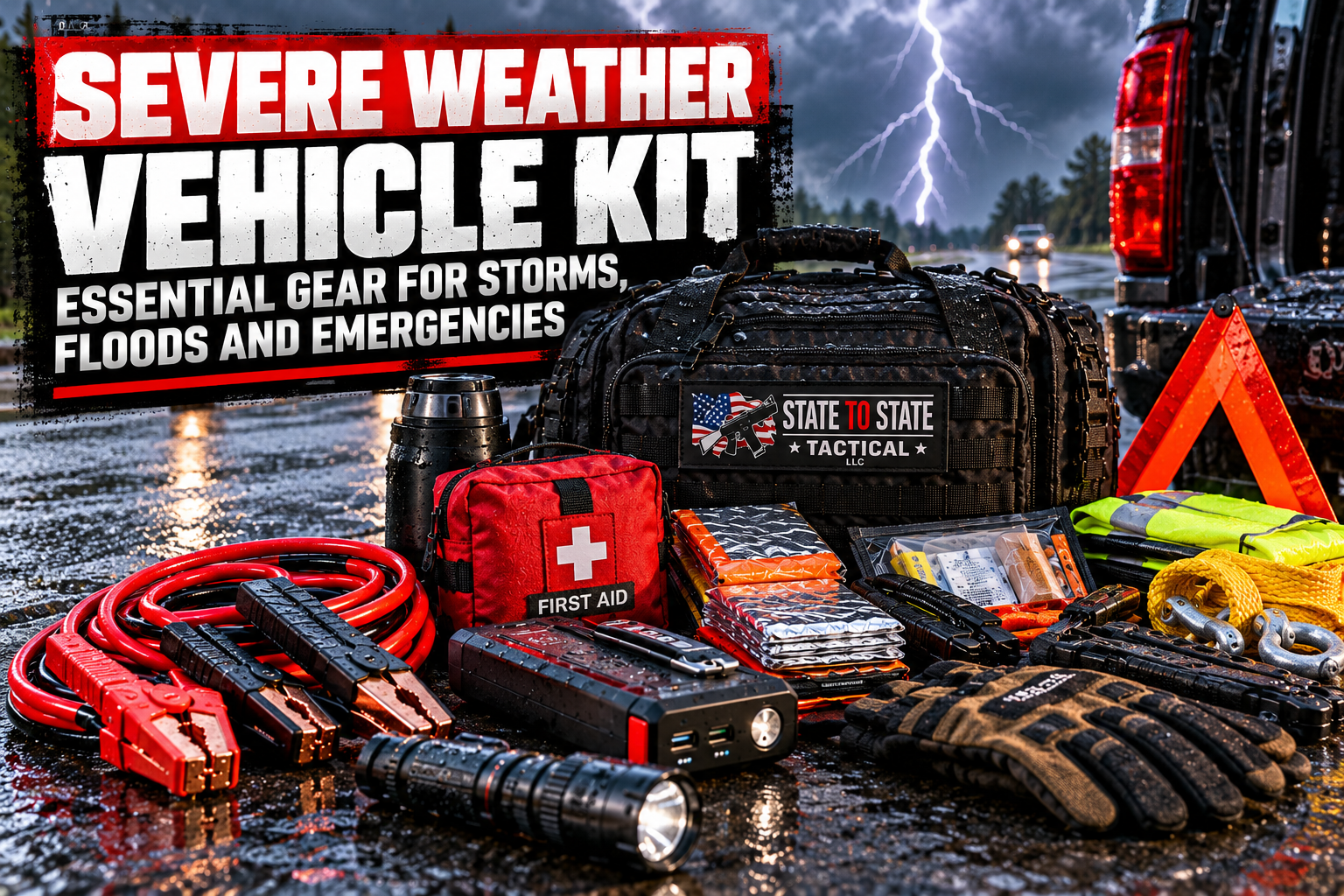
Severe weather can change driving conditions quickly. Heavy rain, thunderstorms, flooding, high winds, hail, and sudden road closures can leave drivers delayed or stopped far longer than expected. A well-organized severe weather vehicle kit provides practical supplies for communication, visibility, basic first aid, weather protection, and unexpected roadside problems.
The goal is not to drive through dangerous conditions simply because emergency equipment is available. Preparedness gives you useful options when conditions deteriorate, while good judgment means avoiding hazardous roads and following official warnings whenever possible.
What Belongs in a Severe Weather Vehicle Kit?
Build the kit around realistic needs: staying informed, remaining visible, protecting yourself from rain and temperature changes, keeping communication devices powered, and handling ordinary vehicle problems. Your exact equipment should reflect your climate, route, vehicle, and passengers.
1. Reliable Flashlight and Headlamp
Storms can reduce visibility even during daylight, and power outages can make nighttime stops especially dark. Carry a dependable flashlight and consider a headlamp for hands-free use. Recharge lights before major weather events or keep fresh replacement batteries when appropriate.
2. Reflective Vest and Warning Equipment
A reflective vest and warning triangles can improve visibility when a vehicle is stopped. Rain, spray, darkness, and low clouds can make vehicles and pedestrians harder for approaching motorists to see.
Do not leave the vehicle to place warning devices when traffic, flooding, lightning, or other conditions make doing so unsafe.
3. Rain Protection
Pack a waterproof or water-resistant outer layer for each regular passenger. A compact poncho, rain jacket, waterproof gloves, and dry socks can be useful if you must leave the vehicle in wet conditions.
Store clothing and blankets in sealed bags or waterproof containers so the supplies remain dry when needed.
4. First Aid Supplies
A basic first aid kit can help address minor cuts, scrapes, and other small injuries while waiting for assistance. Inspect the kit periodically and replace expired or damaged supplies.
For serious injuries or medical emergencies, contact emergency services when available rather than relying solely on a vehicle kit.
5. Phone Charging and Backup Power
A working phone can provide access to weather alerts, navigation, emergency communication, and roadside assistance. Keep compatible charging cables in the vehicle and consider a charged power bank as backup.
Before traveling during uncertain weather, charge devices fully and enable official emergency alerts appropriate for your location.
6. Drinking Water and Shelf-Stable Food
Road closures and storm-related traffic can extend travel time significantly. Carry drinking water and a reasonable amount of shelf-stable food for the people normally traveling in the vehicle. Inspect and rotate these supplies rather than leaving them forgotten indefinitely.
7. Emergency Blanket and Extra Clothing
Wet clothing and falling temperatures can make an extended delay uncomfortable and potentially hazardous. An emergency blanket, dry layer, gloves, and other seasonally appropriate clothing can provide additional protection.
8. Portable Jump Starter
A portable jump starter can provide another option if the vehicle battery becomes discharged and another suitable vehicle is unavailable. Choose equipment compatible with your vehicle and maintain its charge according to the manufacturer’s instructions.
Traditional jumper cables can also remain part of the kit, provided you understand proper connection procedures.
9. Tire Inflator and Basic Vehicle Equipment
Storm debris and poor road conditions can contribute to tire problems. A portable tire inflator and pressure gauge can be useful for a serviceable tire that has lost pressure. Confirm that your spare tire or factory tire-repair equipment is present and usable.
Keep the vehicle’s jack, lug wrench, and other manufacturer-supplied equipment organized and accessible.
10. Basic Tools and Work Gloves
A compact tool kit and durable work gloves can help with minor tasks. Select tools you know how to use and that make sense for your vehicle. Avoid roadside repairs that expose you to moving traffic, lightning, floodwater, or other serious hazards.
Flooded Roads Require Special Caution
Floodwater can conceal damaged pavement, debris, washouts, and other hazards. Water depth and current can also be difficult to judge from inside a vehicle. Emergency gear does not make driving through floodwater safe.
When a road is flooded or officially closed, use another route and follow instructions from local authorities. Never move barricades or assume another driver’s successful crossing means conditions are safe for your vehicle.
Prepare Before the Storm Arrives
Vehicle preparedness works best before severe weather begins. Check fuel or charge level, tires, windshield wipers, washer fluid, exterior lights, and battery condition. Secure loose cargo and make sure emergency equipment can be reached without digging through luggage.
Review the forecast and potential hazards along your entire route. If authorities advise delaying travel, changing plans may be the most effective safety decision.
Organize Gear in a Dedicated Bag
A tactical bag, emergency duffel, or cargo organizer can keep storm supplies together. Use smaller waterproof pouches for electronics, first aid items, batteries, and dry clothing. Labeling sections can make important equipment easier to locate in darkness or stressful conditions.
Secure heavier equipment so it cannot move through the passenger compartment during sudden braking or a collision.
Communication and Planning Matter Too
Tell someone your expected route and arrival time when traveling during uncertain weather. Keep important contact numbers accessible and know how to reach your roadside-assistance provider.
If cellular service becomes unreliable, previously downloaded maps can help with navigation. A battery-powered or hand-crank weather radio may also be useful in regions where severe storms commonly disrupt communications or power.
Severe Weather Vehicle Kit FAQ
Should I keep storm gear in my vehicle year-round?
Many core supplies can remain in the vehicle, but seasonal items should be adjusted as weather changes. Inspect electronics, batteries, food, water, clothing, and first aid supplies periodically.
Is a vehicle a safe place during lightning?
A fully enclosed hard-top vehicle can generally provide substantial lightning protection when occupants remain inside and avoid contact with conductive interior components. Conditions vary, so follow official weather guidance and seek an appropriate substantial shelter when advised.
What should I do if I encounter a flooded roadway?
Do not attempt to determine safety by driving into the water. Turn around, choose another route, and follow road closures and instructions from local emergency authorities.
How often should rechargeable emergency equipment be checked?
Follow each manufacturer’s charging and storage recommendations. A routine seasonal inspection and a check before significant trips or forecast severe weather can help ensure equipment is ready when needed.
Leave a Reply