
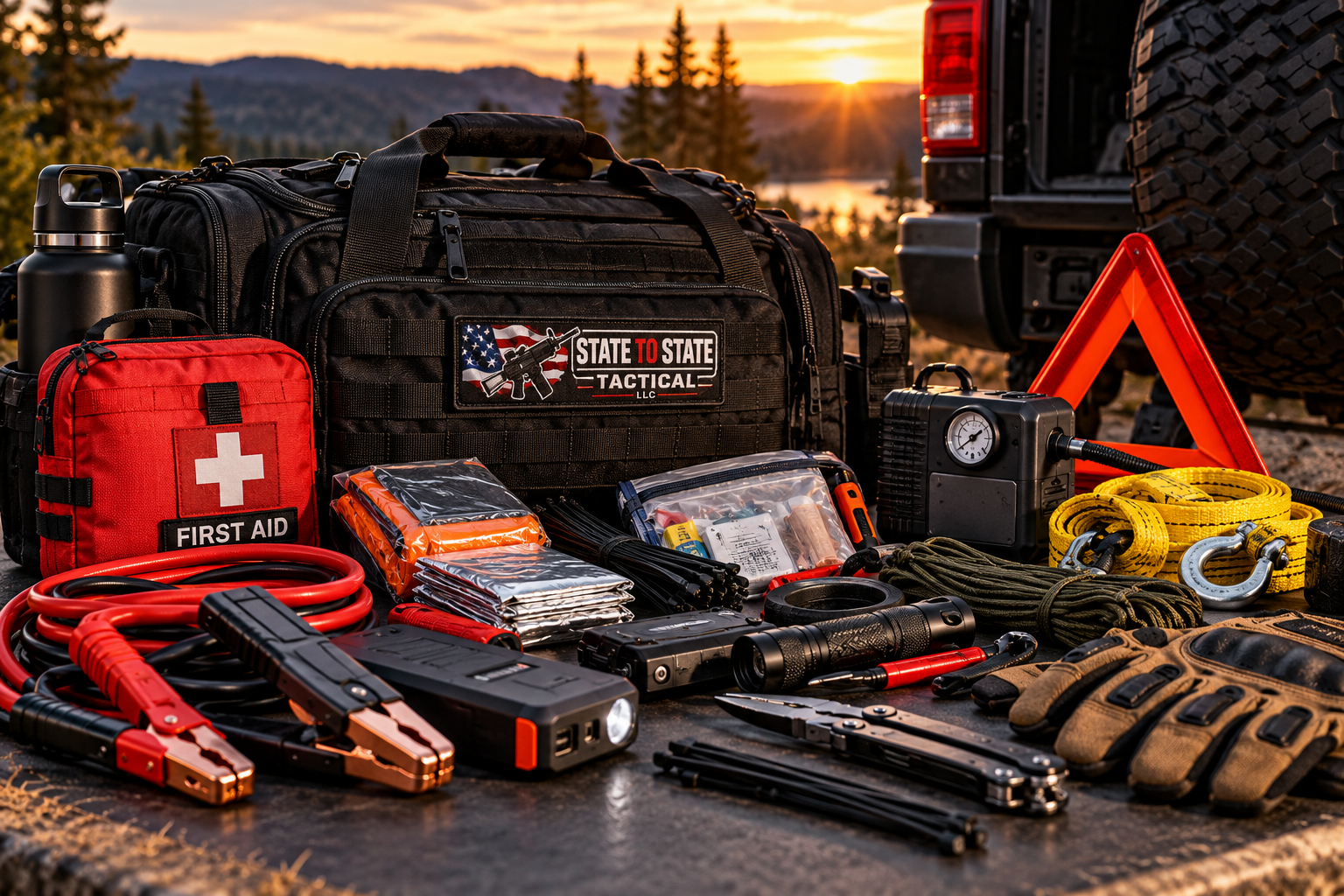
A well-planned vehicle emergency kit can turn a roadside problem from a stressful scramble into a manageable situation. Whether you commute every day, travel for work, take weekend road trips, or spend time on rural roads, keeping practical emergency supplies in your vehicle gives you useful options when plans change.
The goal is not to pack your vehicle with every piece of survival equipment you can find. A better approach is to build a compact, organized kit around the problems drivers are most likely to encounter: minor injuries, dead batteries, flat tires, poor visibility, unexpected weather, temporary breakdowns, and delays while waiting for assistance.
What Should Be in a Vehicle Emergency Kit?
A useful vehicle emergency kit should cover several basic needs: first aid, visibility, vehicle recovery, power, communication, hydration, weather protection, and simple repairs. The exact contents will vary based on your climate, vehicle, travel habits, and the number of people you normally carry.
Start with dependable essentials and organize them so you can reach them quickly. A rugged backpack, trunk organizer, or gear bag can keep small items from disappearing under seats or rolling around the cargo area.
1. First Aid and Basic Medical Supplies
A first aid kit belongs near the top of any vehicle preparedness list. Minor cuts, scrapes, burns, blisters, and other everyday injuries can happen at work, on the road, at a trailhead, or during a family trip.
Look for a kit with clearly organized compartments and supplies appropriate for routine first aid. Common items include adhesive bandages, sterile gauze, medical tape, antiseptic wipes, disposable gloves, scissors, and basic wound-care supplies. Periodically inspect the kit and replace expired, damaged, or depleted items.
Browse our First Aid & Emergency Gear section for equipment that can help you organize this part of your vehicle kit.
2. A Reliable Flashlight and Backup Lighting
Roadside problems do not wait for daylight. A dependable flashlight makes it easier to inspect a tire, locate equipment, read instructions, or signal your presence after dark. A headlamp can also be useful because it keeps both hands available while you work.
Rechargeable lights are convenient, but consider how you will keep them charged. Some drivers carry a secondary battery-powered light as a backup. Check your lights periodically rather than discovering a dead battery during an emergency.
See the Flashlights & Lighting category for portable lighting options.
3. Jumper Cables or a Portable Jump Starter
A weak or discharged battery is one of the most common reasons a vehicle may not start. Traditional jumper cables remain useful when another vehicle is available. A portable jump starter adds another option because it can be used without positioning a second vehicle nearby.
If you carry a jump starter, follow the manufacturer’s charging, storage, and operating instructions. Recharge it on a regular schedule and make sure it is rated appropriately for your vehicle.
4. Tire Inflation and Tire-Change Equipment
Check that your vehicle still has the factory jack, lug wrench, spare tire or manufacturer-provided tire repair system. If your vehicle uses a spare, verify its air pressure periodically. Spare tires can slowly lose pressure even when they are never used.
A compact tire inflator and an accurate pressure gauge can be useful for a slow leak or an underinflated tire. These tools do not replace proper tire repair, but they may provide useful options depending on the situation and the vehicle manufacturer’s guidance.
5. Roadside Visibility Equipment
Being visible is especially important when a vehicle is stopped near traffic or in poor weather. Reflective warning triangles, a reflective vest, and emergency lights can help other drivers notice a stopped vehicle sooner.
Place warning devices only when it is safe to do so and follow applicable local rules. If the vehicle is in a dangerous location, personal safety takes priority over retrieving equipment from the trunk.
6. Weather Protection
Vehicle emergencies can involve long waits, and the temperature outside can change quickly. Keep season-appropriate items such as a compact blanket, rain poncho, warm gloves, hat, or extra layer. In hot climates, sun protection and additional drinking water may be more important.
An emergency blanket takes very little storage space, making it an easy addition even when cargo room is limited.
7. Water and Shelf-Stable Snacks
A small supply of drinking water is useful during traffic delays, breakdowns, and unexpected stops. Rotate stored water and food periodically, particularly if your vehicle experiences extreme heat or freezing temperatures.
Choose simple shelf-stable snacks that tolerate storage reasonably well and accommodate the needs of the people who regularly ride in the vehicle.
8. Charging and Communication Backup
Your phone may be your primary way to call roadside assistance, contact family, use navigation, or check weather information. Keep a vehicle charging cable that fits your current phone and consider a charged portable power bank as a backup.
Important phone numbers can also be written on a small card in case your phone is unavailable or another person needs to make a call on your behalf.
9. Basic Tools and Repair Supplies
You do not need a full workshop in the trunk. A compact set of useful tools can handle small tasks and equipment adjustments. Depending on your needs, that might include a multi-tool, screwdrivers, adjustable wrench, pliers, utility tape, zip ties, work gloves, and a small roll of strong cord.
Choose tools you actually know how to use and keep them secured inside a pouch or organizer.
10. Vehicle Recovery Gear for Your Driving Conditions
Drivers who routinely travel on rural roads, job sites, snow-covered routes, or unpaved areas may need additional recovery equipment. What makes sense depends heavily on the vehicle and environment.
Recovery straps, traction aids, a shovel, or other equipment can be useful in appropriate situations, but recovery operations can create significant forces and hazards. Use only equipment rated for the intended task and follow the equipment and vehicle manufacturers’ instructions. When conditions are unsafe or uncertain, professional recovery assistance is the better option.
Our Vehicle & Travel Gear section is a useful place to browse equipment intended for travel organization and roadside preparedness.
How to Organize a Vehicle Emergency Kit
Organization matters almost as much as the equipment itself. Divide supplies into logical groups so you do not have to empty the entire bag to find one item. For example, keep first aid supplies together, lighting and electronics together, and vehicle tools in a separate compartment.
Secure heavier equipment so it cannot become a projectile during sudden braking or a collision. Store the kit where it can be reached without completely unloading the vehicle.
How Often Should You Check Your Emergency Kit?
Inspect the kit several times per year and before major road trips. Recharge batteries and power banks, test flashlights, check the spare tire, rotate water and food, replace expired first aid supplies, and make sure seasonal clothing still matches current conditions.
This quick inspection also gives you a chance to remove items you no longer need and add equipment that better matches how you currently use your vehicle.
Build the Kit Around Your Actual Needs
The strongest vehicle emergency kit is not necessarily the largest one. It is the kit that matches your vehicle, environment, passengers, and normal travel patterns. A daily commuter in a city may prioritize first aid, lighting, charging, and roadside visibility. Someone who regularly drives long rural routes may place more emphasis on weather protection, water, recovery equipment, and backup power.
Start with the essentials, keep them organized, learn how your equipment works, and review the kit periodically. That creates a practical preparedness system without turning your cargo area into a storage room.
Explore STS Tactical Gear
State to State Tactical LLC organizes practical gear for everyday readiness, travel, personal safety, emergency preparedness, and outdoor use. Visit the STS Tactical Shop to browse current categories and product selections.
Frequently Asked Questions
What are the most important items for a basic car emergency kit?
A practical starting point includes first aid supplies, a flashlight, phone charging equipment, roadside visibility gear, jumper cables or a compatible jump starter, tire equipment, drinking water, weather protection, and a few basic tools.
Where should I store an emergency kit in my vehicle?
Store it in a secure location that is reasonably easy to access, such as a secured trunk organizer or cargo-area gear bag. Heavy items should be restrained so they cannot move freely during sudden stops.
Should I keep the same emergency kit year-round?
The core kit can remain the same, but seasonal items should change with your climate. Cold-weather layers and blankets may matter more in winter, while additional water and sun protection may be priorities during hot weather.
Ready to Browse Tactical Gear?
Explore emergency gear, lighting, personal-safety products, tactical bags, outdoor equipment and other STS Tactical recommendations.
Leave a Reply